


No products in the cart.


Product Description


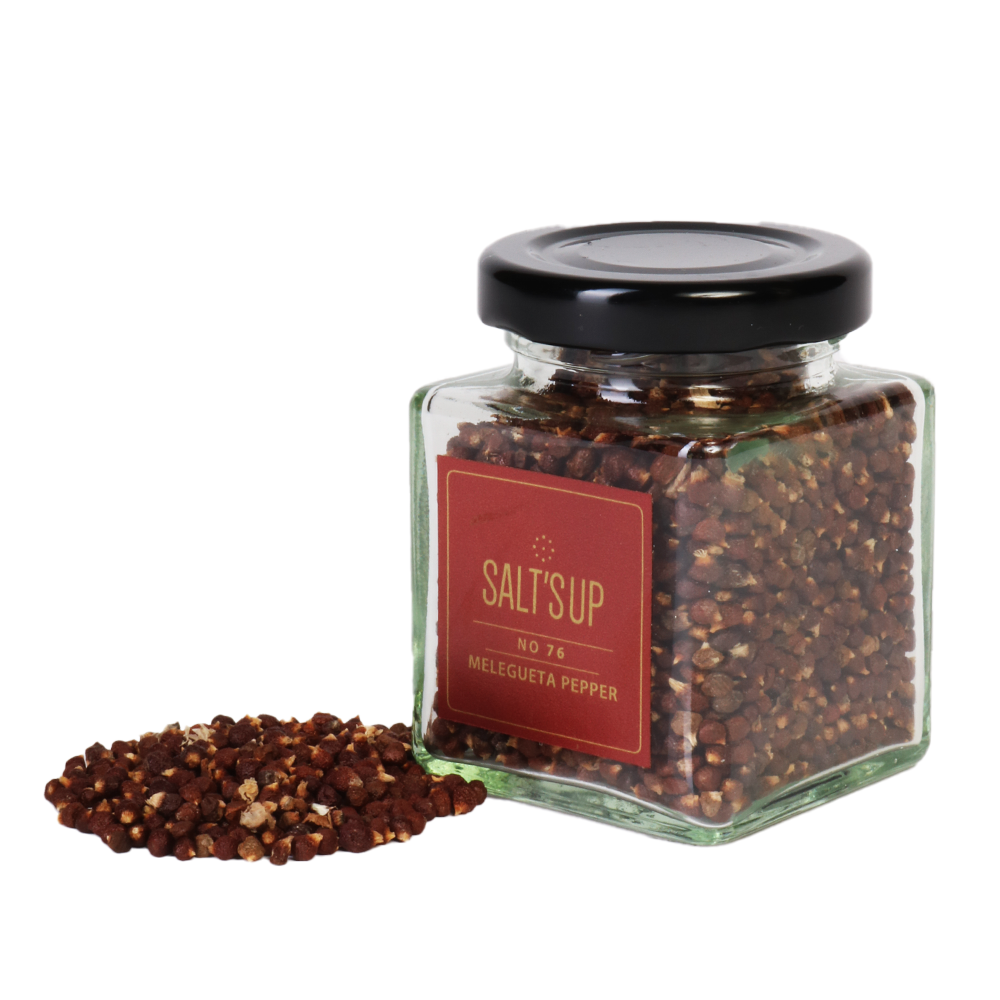
MELEGUETA pepper No. 76
7.99€
Melegueta pepper, also known as ‘grains of paradise’, is a rare spice native to the coastal regions of West Africa.
Melegueta pepper has a pungent flavour and an aroma reminiscent of cardamom and camphor. Compared to black pepper, melegueta is quite mild. The seed contains a unique combination of aromatic ketones, which give it its distinctive flavour.
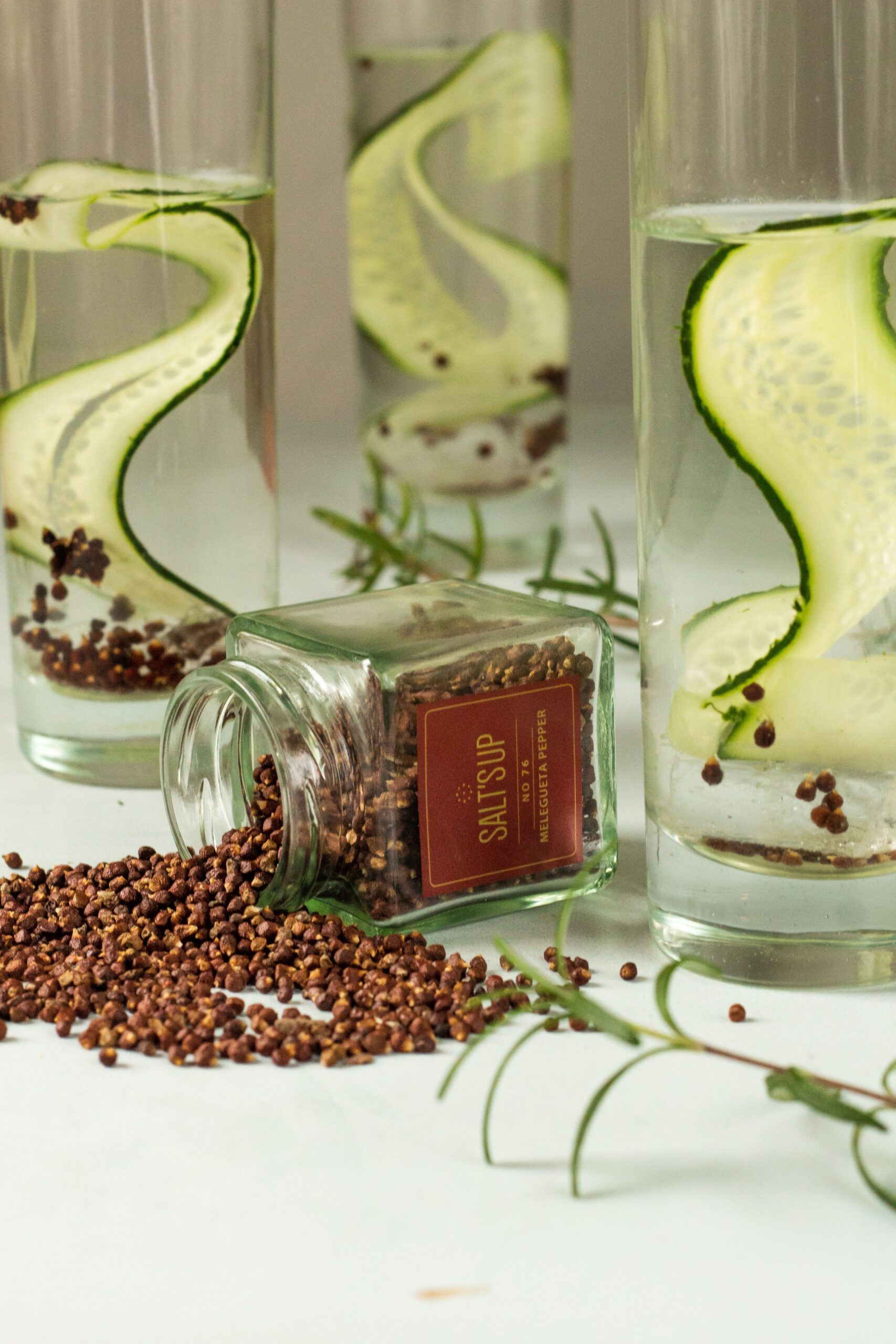
Grains of paradise are particularly well suited to dishes featuring tuna. It is excellent with meat dishes and stews. It is also suitable for flavouring gin and other alcoholic cocktails.
Melegueta seeds can be used whole or crushed, either during cooking or as a finishing touch in place of black pepper. It is a spice that pairs well with other herbs, particularly thyme, rosemary and sage.
As the seeds are hard, it is best to use a mortar and pestle to crush the melegueta pepper.
Country of origin: Ghana
60g jar
Description
What is Melegueta pepper, also known as ‘grains of paradise’?
The Melegueta pepper plant is a herbaceous plant native to West Africa. Its Latin name is Aframomum melegueta and it belongs to the ginger family. The spice is known by many other names, including ‘grains of paradise’, ‘ossame’, ‘alligator pepper’, ‘African pepper’, ‘Guinea grains’ and ‘Guinea pepper’.
The flavour of melegueta pepper
Paradise grains have a peppery heat. This is followed by citrusy notes, with hints of cinnamon, cloves and cardamom. The aroma is reminiscent of walking through a forest filled with pine trees.
Melegueta pepper vs black pepper
Unlike black pepper, alligator pepper is a dried seed, not a berry. Piperine is a naturally occurring organic compound found in black pepper. The alkaloid it contains, known as piperine, gives black pepper its peppery flavour. Melegueta pepper’s genetic composition does not include piperine.
Alligator pepper sounds like a pepper that might be quite strong. The truth, however, is that it is quite mild compared to black pepper. The seed contains a unique combination of aromatic ketones, which gives it a distinctive peppery flavour. The dominant flavour derived from the essential oils found in cardamom is also present to a small extent in Melegueta pepper. This is also the source of its slight cardamom flavour.
How to store paradise seeds
Store whole seeds in a glass jar with a tight-fitting lid. Kept in a cool, dry and dark cupboard, this pepper will keep for up to three years.
Once crushed, it can be added to many dishes. We recommend using the crushed pepper straight away, when the flavour and aroma are at their best.
How is Melegueta pepper used?
Aframomum melegueta seeds can be used whole or ground, either during cooking or as a finishing touch in place of black pepper. It is a spice that pairs well with other herbs, particularly thyme, rosemary and sage.
A mortar and pestle are best for crushing Melegueta pepper, as the seeds are hard. Once crushed, the seeds release their full flavour and reveal their white interior.
Recipes usually call for between ¼ and 1 teaspoon when cooking. When baking, it is recommended to grind the spice into a powder before adding it to biscuits, cakes or bread.
The spice was often mixed into a blend called galot daggo. This was made with pepper, cinnamon, cloves and nutmeg. Nutmeg is often replaced with cubeb pepper.
The historical background of African pepper
Arab, Berber and Jewish traders were the first to sing the praises of African pepper. From West Africa – present-day Liberia – caravans of camels moved slowly across the Sahel, through the endless Sahara and then across Sudan. Eventually, the spices made their way across the ocean to Europe.
At first, the spice was simply identified and referred to as African pepper. Pliny the Elder, a 1st-century military commander and writer, best known for his encyclopaedic natural history, mentions African pepper in his writings.
Later, Europeans renamed the spice ‘grains of paradise’. This created a distinction between grains of paradise and black pepper, the latter of which commanded the highest price. To the relief of coin collectors, it is hardly surprising that ‘grains of paradise’ became a popular substitute for black pepper in European kitchens during the 14th and 15th centuries.
During this period, spices were generally used not only in cooking but also to preserve the quality of food and drink. The *Ménagier de Paris* or *Parisian Household Book* (1393) recommended using grains of paradise to improve wine that had gone off.
In the mid-1400s, King Afonso V of Portugal granted Fernão Gomes, a merchant from Lisbon, exclusive rights to trade within 100 miles of the Gulf of Guinea in West Africa. This gave the shrewd entrepreneur a stranglehold on the now much-loved Aframomum melegueta. By this time, the grains of paradise had been renamed Melegueta pepper.
What does ‘Melegueta’ mean?
According to historians, the term may be linked to the Italian word for millet, which is ‘meligo’. Others claim that it took its name from the Spanish city of Málaga, which was an ancient Phoenician port at the time. Regardless, the French translated the word as ‘maniguet’.
‘Guinea grains’, ‘Guinea pepper’ and ‘alligator spice’ are other names given to this spice by the British.
How is Aframomum melegueta grown and harvested?
The perennial plant Aframomum melegueta, although short in stature and growth – just 35 centimetres tall and 15 centimetres wide – bursts into a profusion of magnificent flowers during the flowering season. Each trumpet-shaped flower displays its beauty with a rosy-orange blush and an orange-tinged lip. The scent is very aromatic.
Small, tube-shaped pods develop from these blooms. Each is about five to seven millimetres long. Inside are numerous reddish-brown, golden seeds.
On the farms, the men harvest the peppers and the women extract the seeds by hand, removing them from the pulp. This is done gently to prevent any seeds from being lost. The leaves are then removed and the seeds are spread out to dry in the sun.
Cooking with Melegueta pepper
This spice is the most common in West African cuisine. It is so important to Yoruba culture that a newborn child is given a taste of the pepper immediately after birth.
Try using Melegueta pepper in curries, stews, marinades or salad dressings. It is particularly delicious in stewed lamb with potatoes and aubergines. Paradise grains make a wonderful addition to gingerbread and cakes.
Flavouring drinks with paradise seeds.
In West African villages, these seeds are used to flavour a traditional drink made from cola nuts. Guinea berries have found their way into craft beers. Scandinavians enjoy the flavour of aquavit.
For a festive holiday atmosphere, add a couple of paradise seeds to red wine, along with a little orange juice, a cinnamon stick, cranberries and a few orange slices. Heat it up and enjoy your mulled wine! Or serve it with glögg.
Bombay Sapphire Gin is a premium gin with an aromatic flavour. This neutral grain spirit, distilled in England and infused with 10 botanicals, is made according to a recipe dating back to 1761. Grains of West African allspice help to add flavour to Bombay Sapphire.
It is amusing to think that, as recently as 150 years ago, adding seeds from the paradise plant to alcohol was strictly forbidden and a punishable offence. It was believed at the time that this poisoned the body and mind, thereby causing madness.
Bombay Sapphire Gin also contains juniper berries, orris root, Spanish almonds, lemon peel, liquorice, cassia bark, coriander and another of our favourites: cubeb pepper.
The benefits of cubeb pepper
In West African folk medicine, it is used as a digestive aid. It is also chewed whole to warm the body. Furthermore, this African pepper, when ground and added to broth, has been noted for its wound-healing properties. Among older generations, both the seeds and the pods are used as remedies in traditional medicine and are valued for their antibiotic and antibacterial properties.
Due to its anti-inflammatory and analgesic properties, this small seed relieves pain, such as that caused by osteoarthritis and rheumatoid arthritis, as well as stomach ache and even toothache.
When oils are extracted from the seed, they appear to possess antimicrobial properties that may be useful in cleaning products, whilst also meeting the demand for natural products.
Guinea Pepper Voodoo
In the Caribbean and Latin American countries, this Guinea pepper is used in religious Voodoo ceremonies. It is said that sprinkling Guinea pepper on a lover’s bed causes the couple to part ways for good. However, when sprinkled around the home or yard, it protects the homeowner and their family from the intrusion of enemies.
Why we love Melegueta pepper
We might love these ‘paradise grains’ simply for their name, but this spice captivates us with its versatility and exciting flavour. It’s well worth a try!
Korduma Kippuvad Küsimused
Mis teeb MELEGUETA pepper No. 76 eriliseks?
MELEGUETA pepper No. 76 on käsitsi korjatud ja hoolikalt töödeldud gurmeeklassi pipar. Erinevalt tavalise musta pipra massitoodangust on igal gurmeepipral oma unikaalne aroomiprofiil, mis tuleb esile värskelt jahvatades.
Kuidas pipart õigesti säilitada?
Hoidke pipart kuivas, pimedas kohas hermeetilises anumas. Jahvatage alati vahetult enne kasutamist – nii säilib aromaatsete õlide intensiivsus. Teralistena säilib pipar aastaid, jahvatatult kaotab aroomi mõne kuuga.
Milliste toitudega MELEGUETA pepper No. 76 sobib?
Gurmeepiprad sobivad nii liha-, kala- kui köögiviljatoitudega. Proovige lisada lõpuviimistlusena valmis roale, salatikastmetele või isegi magustoitudele. Iga pipar on erinev – eksperimenteerige julgelt!
Kui kiiresti tellimus kohale jõuab?
Tellimused saadetakse tavaliselt 1–2 tööpäeva jooksul. Eesti-sisene tarne võtab üldjuhul 2–3 tööpäeva. Tallinna poes (Kentmanni 19) on võimalik ka kohapealne kättesaamine.
VAATA KA NEID TOOTEID

Long pepper Long pepper has a delicate floral aroma with a slight kick, particularly when cooked for a long time.
Use it with: dark meat, vegetables, in compotes, in desserts and as an accompaniment to fruit. It is best simply to crush it so that the pepper’s strength can add flavour to curries, particularly in vegetarian dishes and slow-cooked meals. Country of origin: Indonesia 70 g
9.90€ Add to cart
Timuti and lemon pepper This pepper has been used by the indigenous peoples of the Himalayas for over a thousand years.
Timuti and lemon pepper is similar to the famous Szechuan pepper, but its grains are larger and lighter in colour. Timuti’s flavour profile consists of enchanting passion fruit, citrus with a strong rose note, jasmine and hyacinth, with subtle hints of smoky and woody berries. It has a very peppery heat and also possesses pain-relieving properties. It pairs very well with: - fish: white fish, fish carpaccio, tartare, ceviche -seafood: crab, scallops, prawns -meat: white meat, poultry, pork, beef, duck, lamb, turkey - with cheese: fresh and young goat’s cheese - with desserts: mango, pineapple, citrus fruits, strawberries, melon, lychees, passion fruit, apricot and chocolate 50 g
9.90€ Add to cart
Try out different peppers and find your favourite:
The tasting set includes:
Voatsiperifery pepper, tiger pepper, whisky pepper, Banasura pepper,
pepper with Schinus berries, Jamaican allspice, timuti and lemon pepper,
Tellicherry pepper and cubeb pepper All the pepper samples come in resealable packaging, so the aroma is preserved.
Original price was: 12.90€.9.99€Current price is: 9.99€. Add to cart
Colourful pepper blend with Schinus berries. Our colourful pepper blend is aromatic and moderately spicy, with a delicate fruity flavour. It is best suited to meat dishes, salads, pasta and sauces. Contains: black, white, green and pink peppercorns. It looks absolutely stunning in its transparent mill and is also perfect for decorating the table. Country of origin: India / Brazil / Sri Lanka 70 g
9.90€ Add to cart
This exceptional pepper comes from the Malabar Coast Highlands Nature Reserve, located in south-west India. Tiger pepper really comes into its own in dishes thanks to its unique and strong flavour. It is excellent with grilled meat and fish, and is also ideal for use in sauces. Country of origin: India 50 g
7.99€ Add to cart
Cubeb, or cubeb pepper. Cubeb pepper originates from tropical regions such as Java and other Indonesian islands. This pepper has a warm, pleasant aroma; it is slightly peppery but also reminiscent of other spices, with soft notes of eucalyptus and turpentine. Heating the pepper brings out this pleasant aroma. This pepper is best suited to meat and vegetable dishes. It pairs very well with cardamom, cinnamon, curry leaves, rosemary, sage, thyme and turmeric. Country of origin: Indonesia 70 g
12.90€ Add to cart
Experienced smoke masters have turned Banasura pepper into a true culinary delight. Smoked Banasura pepper is at its best with red meat and burgers. For the best aroma and taste, grind the pepper just before eating, and if you’re frying or boiling food, add it just before it’s ready. Country of origin: India 70 g
12.90€ Add to cart
At the Salt Shop, you’ll find the perfect gift for a friend or colleague. It’s perfect as a gift for a salt bread celebration or a birthday. The beautiful, reusable plywood gift box contains the perfect set for exploring our selection of salts and peppers. The selection includes Alaea coarse – a salt with red clay, Crystal white salt flakes, Black Lava black decorative salt, and Smoke flakes – smoked salt flakes produced using the Viking method. Also included are peach-coloured Crystal Pink Flakes – pink salt flakes – and Bamboo Jade, a green-coloured granular salt. In addition to the gourmet salts, we’ve selected three fine peppers for the box: hot cubeb pepper, Tellicherry and tiger pepper. PS! If you’d like to swap any of the salts or peppers for your favourite variety, please note this in the comments when placing your order.
Original price was: 109.99€.99.00€Current price is: 99.00€. Add to cart
Cubeb, or cubeb pepper. Cubeb pepper originates from tropical regions such as Java and other Indonesian islands. This pepper has a warm, pleasant aroma; it is slightly peppery but also reminiscent of other spices, with soft notes of eucalyptus and turpentine. Heating the pepper brings out this pleasant aroma. Kubeeba pepper is not as hot as black pepper. On the pepper heat scale, it scores a fairly low three out of ten. This pepper is best suited to meat and vegetable dishes. It pairs very well with cardamom, cinnamon, curry leaves, rosemary, sage, thyme and turmeric. Country of origin: Indonesia 35g jar
7.99€ Add to cart
Melegueta pepper, also known as ‘grains of paradise’, is a rare spice native to the coastal regions of West Africa. Melegueta pepper has a pungent flavour and an aroma reminiscent of cardamom and camphor. Grains of paradise are particularly well suited to preparing tuna. They are excellent with meat dishes and stews. They are also suitable for flavouring gin and other alcoholic cocktails. Country of origin: Ghana 100 g
12.90€ Add to cart
This surprising and rare Indonesian pepper has a wonderful citrusy flavour and aroma. It is ideal with fish, seafood and poultry, and is perfect for everyday use.
Andaliman is a distant relative of Sichuan pepper and is used in Sumatra in much the same way as black pepper is in the West.
This pepper has a distinctive, slightly pungent flavour, which really brings out your taste buds. It is precisely this quality that makes Andaliman pepper ideal for dishes where the flavour needs to be particularly emphasised. This pepper is ideal for meat lovers – it brings out the flavours of chicken and red meat particularly well. But enough about meat – here at our spice shop, we decided to try using this very same pepper to make tea instead! We added a little to hot water and it tasted absolutely delicious. Country of origin: Indonesia 15g jar
Tellicherry pepper has a very distinctive fresh flavour. Tellicherry pepper is considered to be more aromatic than other types of pepper. Its aroma has a strong and distinctive citrus note. Tellicherry pepper can be used just like any other black pepper. We recommend using it to season savoury dishes, such as lemon and pepper chicken. It also makes a great addition to your pantry, allowing you to add a special flavour to your dishes quickly and easily. Country of origin: India 80 g
9.90€ Add to cart
Whisky Pepper Whisky Pepper is a unique blend of black Malabar pepper and whisky. This pepper offers a unique and novel taste experience, transforming an ordinary cut of meat into a restaurant-quality dish right on your own dining table! The whisky balances the pepper, whilst also adding a touch of smoothness and sweetness, making this pepper an excellent accompaniment to meat and fish. The subtle peppery sensation and the distinctive, striking flavour of the whisky are what make this whisky pepper so unique. This whisky pepper is the ideal gift for chefs who love to experiment with different new flavours. Country of origin: India/Germany 45g jar
7.99€ Add to cart
Jamaican allspice Deeply aromatic, small and brownish, these seed-like fruits – better known as allspice berries – offer a piquant flavour followed by subtle notes of cinnamon, cloves and nutmeg. Allspice is one of the key ingredients in Jamaica’s famous ‘Jerk’ meat marinade. Nowadays, it can also be found in ketchups, meat marinades, pickles, rum cocktails and even spicier cakes all over the world. Country of origin: Guatemala 30 g
7.99€ Add to cart
Banasura Highland pepper is one of the most prized peppers from the Malabar Coast. It is grown in the Wayanad Valley in Western India. Banasura pepper is aromatic and hot thanks to the exceptional size of the peppercorns. Banasura pepper is ideal with red meat, grilled meat and burgers. For best results, add the pepper to your dish at the very end – freshly ground. If you store Banasura pepper in a cool, dark place, it will retain its aroma for 2 years. Once ground, the pepper will retain its aroma for approximately 3 months. Country of origin: India 80 g
9.90€ Add to cart